Your basket is empty.
Continue Shopping
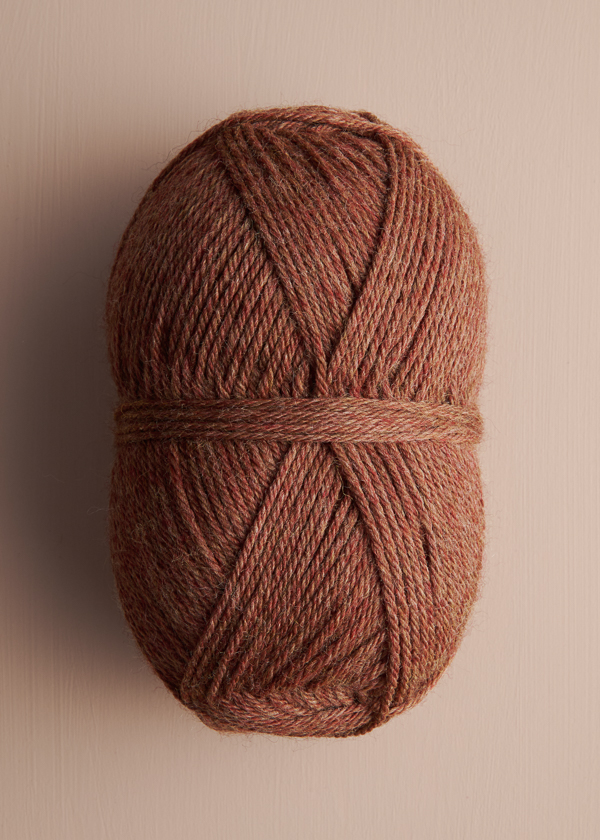
Atelier Scarves
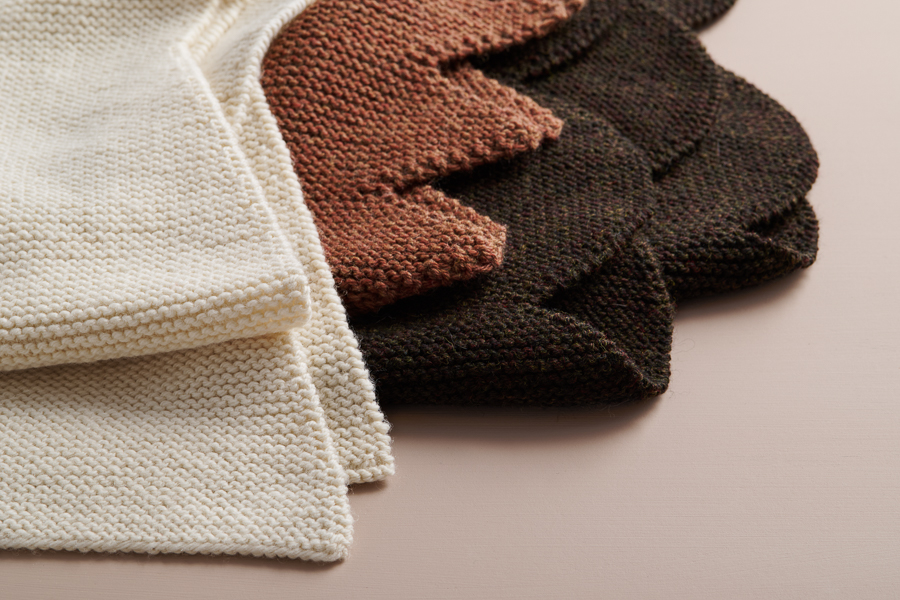
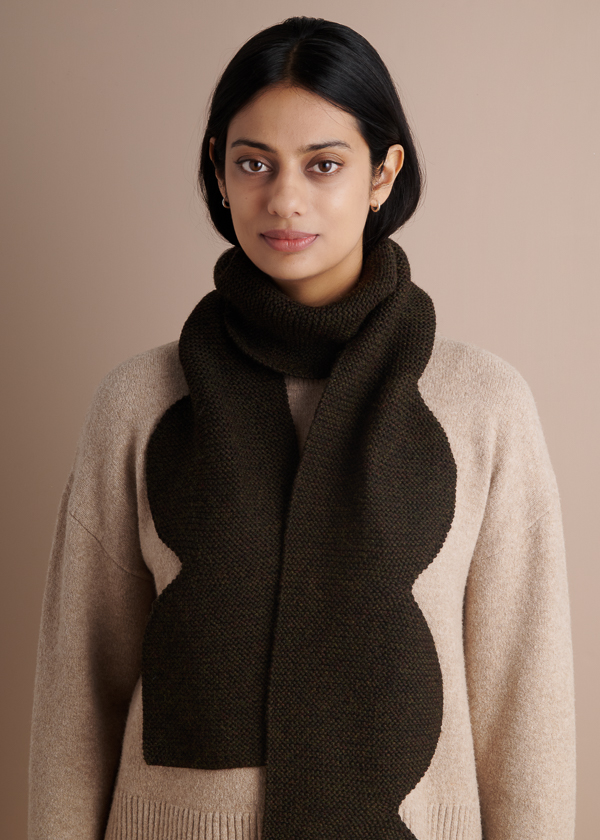
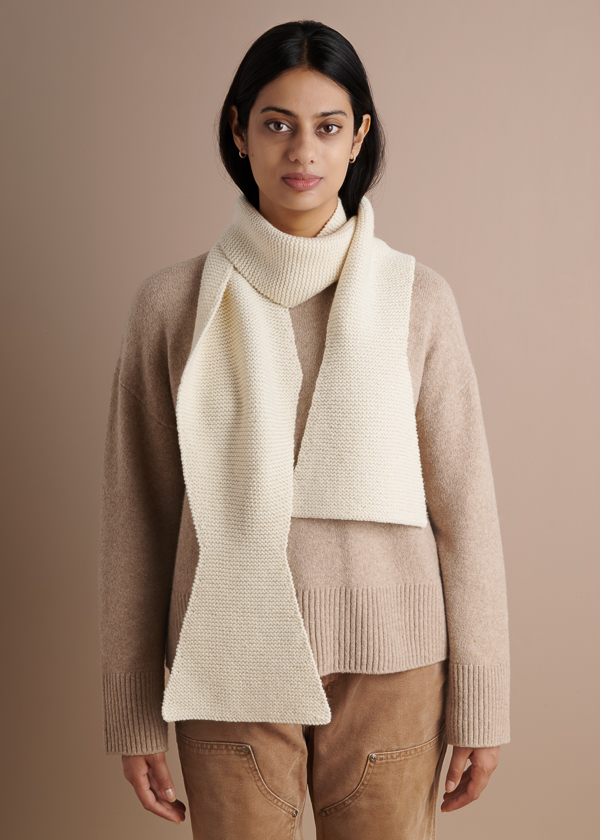
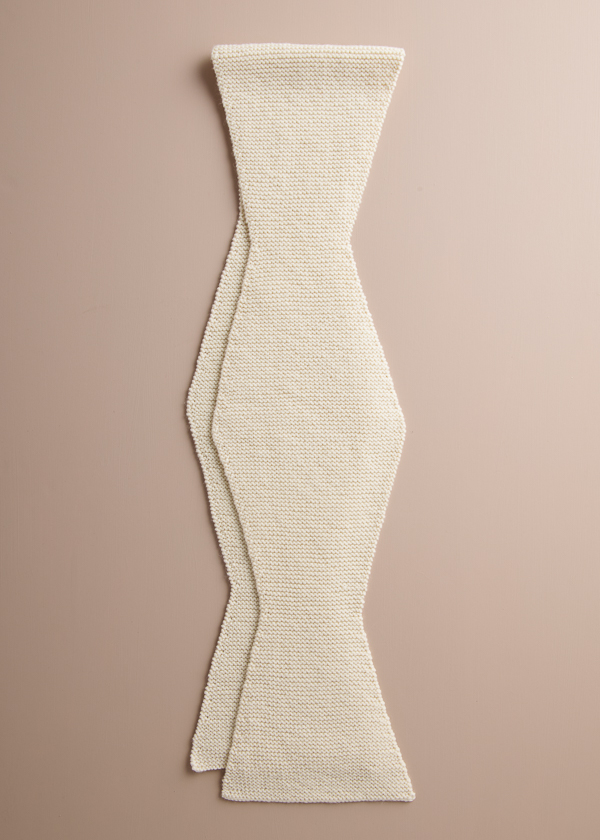
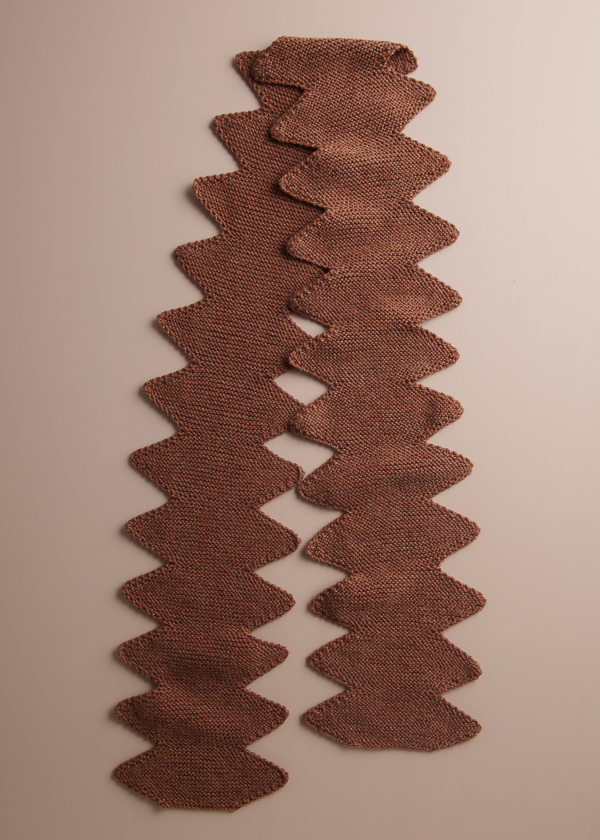
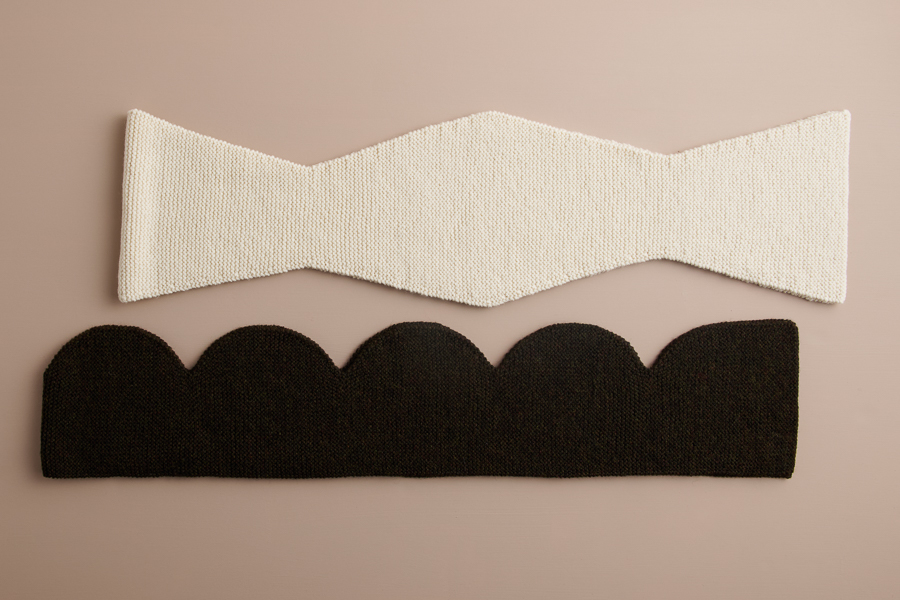
Inspired by the modernist forms of Constantin Brancusi’s sculptures, our Atelier Scarves explore the possibilities of simple garter stitch, while 100% merino wool Knitting Yarn DK brings crisp definition to the curves, angles, and tapers of our three striking scarf patterns.
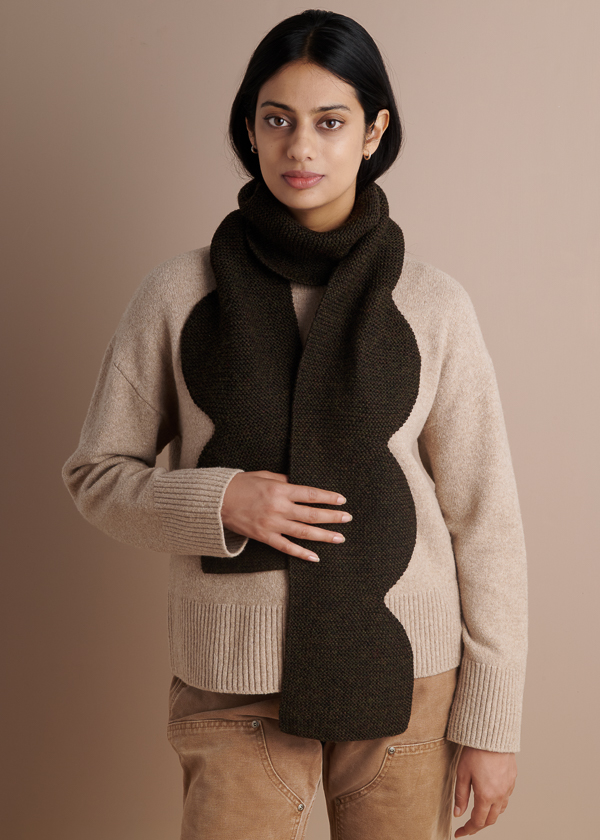
Brancusi continually searched for the simplest expression of a form, what he called “the essence of things.” While his favored materials were wood, stone, and bronze, we picked up our needles and yarn to discover the natural shapes it’s possible to “sculpt” from knitted fabric.
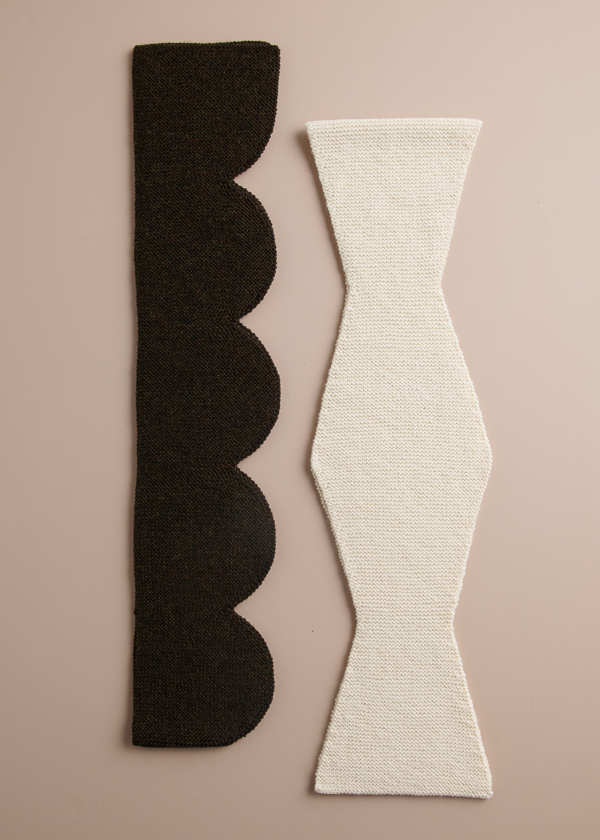
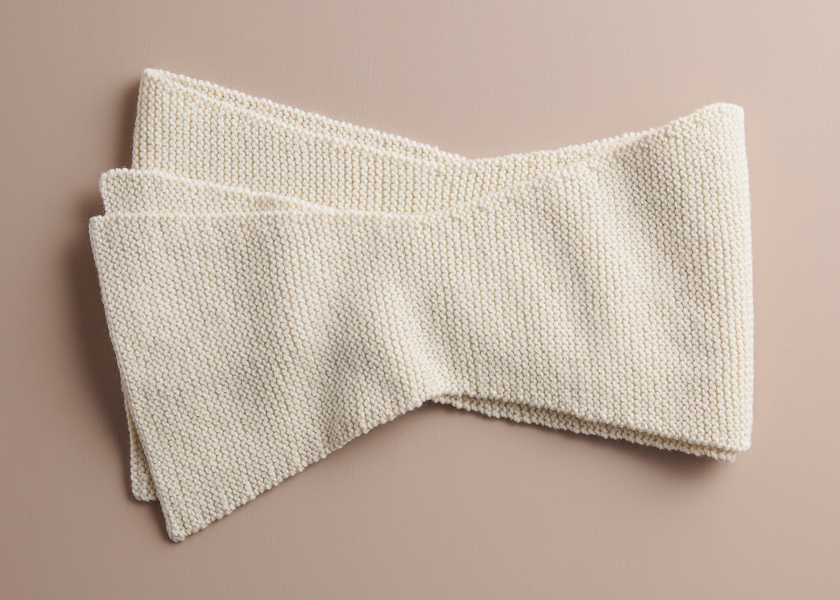
Each Atelier Scarf is knit entirely in garter stitch, with basic increases and decreases shaping the scallops, sawtooths, and tapered columns of our three distinctive patterns.
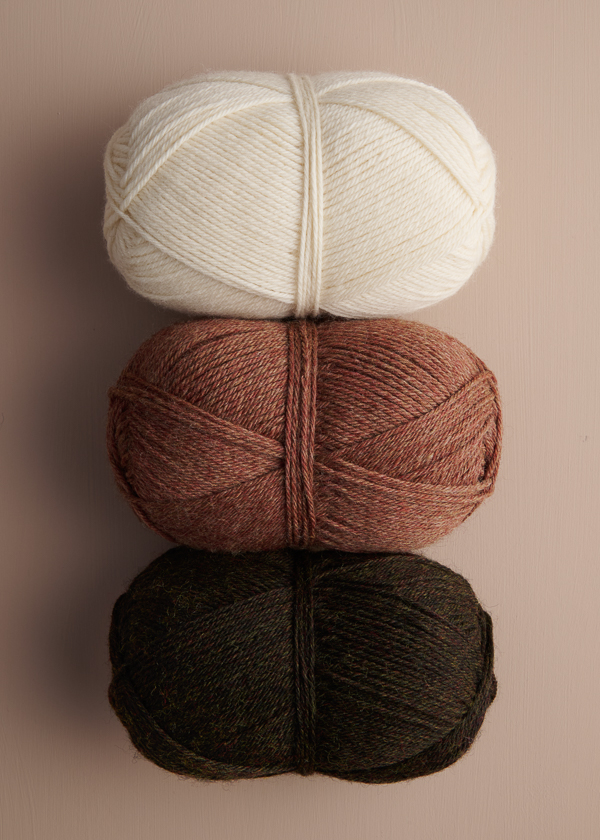
A perfect match for these graphic shapes, Knitting Yarn DK is classic merino wool with a round, bouncy spin and a soft hand tempered by just a bit of pleasing toothiness that connects you with the yarn’s sheepy origin. It comes in ready-to-knit 100-gram balls and over 30 beautifully heathered colors, including the three gorgeous, earthy neutrals we chose: Heirloom White, Acorn Brown, and Peat Bog.
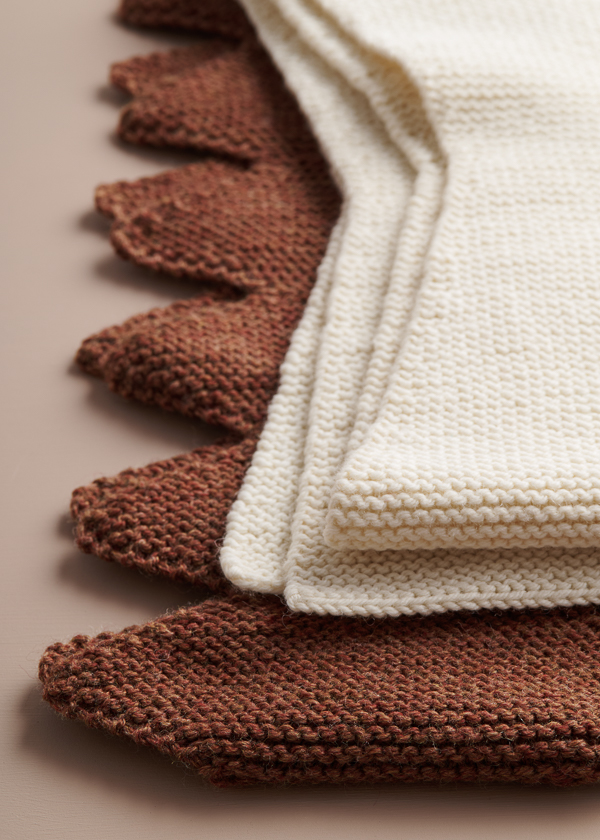
Choose from the Accordion Scarf, the Column Scarf, and the Scallop Scarf, all super satisfying knits with wonderfully different personalities. Three balls of Knitting Yarn DK is all you need to bring your favorite to life!
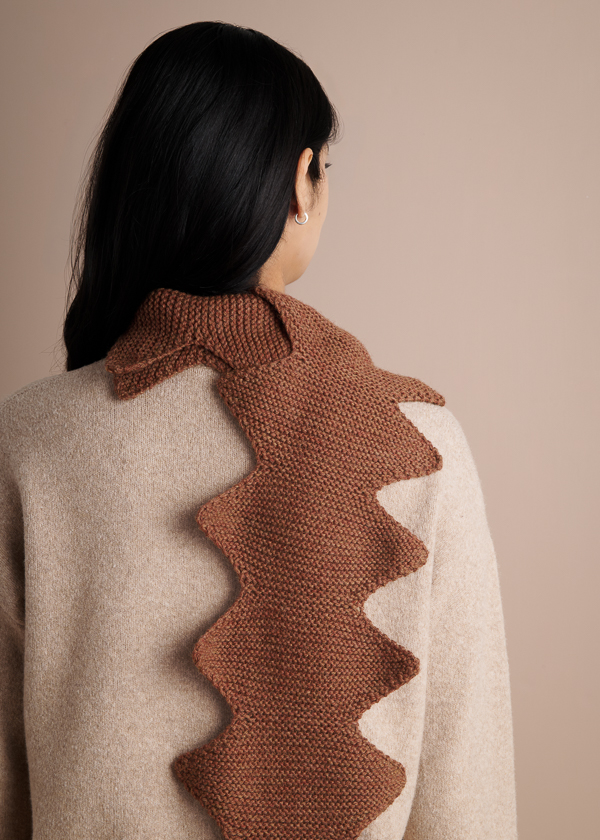
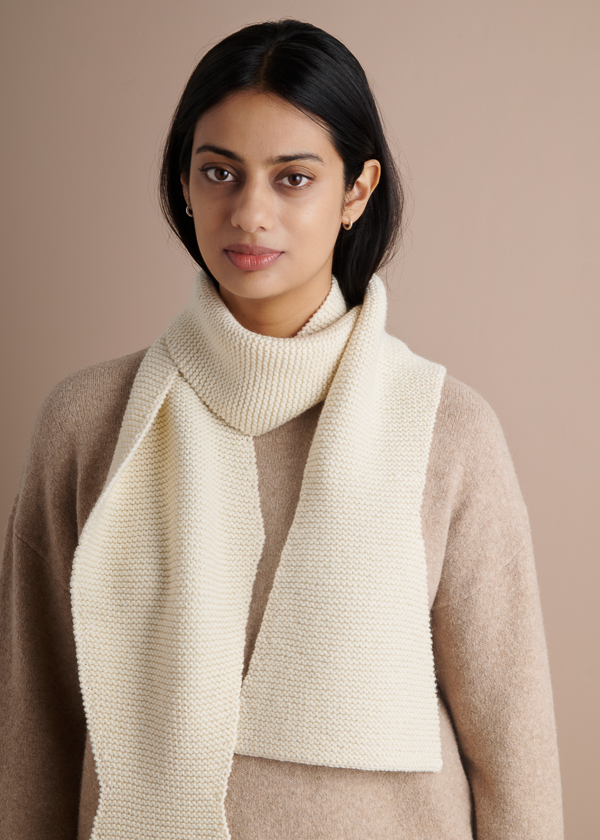
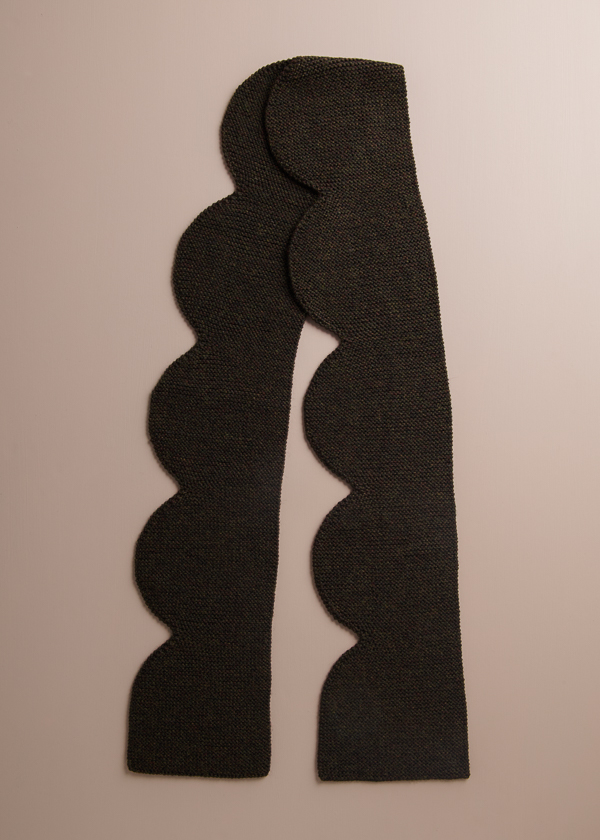
Pattern designed and written by Purl Soho founder and co-owner, Joelle Hoverson, and Purl Soho designers, Hiromi Glover and Gianna Mueller.
Story written by Andrea Lotz for Purl Soho.
Want to print this pattern? On desktop, find the “print” icon in the right margin, and on mobile, scroll to the end of the pattern for it. Use the on-screen instructions to remove anything you don’t want to print!
Materials
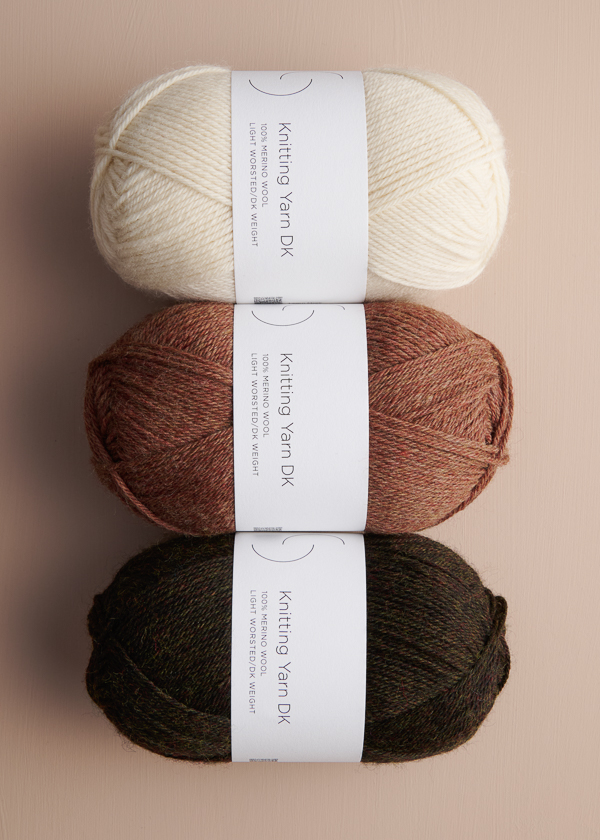
- 3 balls of Purl Soho’s Knitting Yarn DK, 100% merino wool yarn. Each ball of this light worsted/DK-weight yarn is 219 yards/ 100 grams.
- Scallop Scarf: 590 total yards required. We used the color Peat Bog.
- Accordion Scarf: 605 total yards required. We used the color Acorn Brown.
- Column Scarf: 570 total yards required. We used the color Heirloom White.
- US 6 (4mm), 24-inch circular knitting needles
- Removable stitch markers or scrap yarn
GAUGE
22 stitches and 44 rows (22 ridges) = 4 inches in garter stitch
SIZES
Scallop Scarf
- Finished Dimensions: 7 inches at widest point x 69 inches long
Accordion Scarf
- Finished Dimensions: 9 inches at widest point x 69¾ inches long
Column Scarf
- Finished Dimensions: 8¾ inches at widest point x 65½ inches long
NOTES
GARTER RIDGE
A “garter ridge” equals two rows of garter stitch. It looks like a prominent horizontal ridge and is an easy way to count rows!
SLIP STITCHES
Slip all slipped stitches knitwise with yarn in back.
KNIT FRONT, BACK, AND FRONT (KFBF)
Knit into the front of the stitch as usual, but do not let it slide off the left needle, then knit into the back of the same stitch, then knit into the front of it once more, then let the stitch slide off the left needle. [2 stitches increased]
SCALLOP SCARF PATTERN
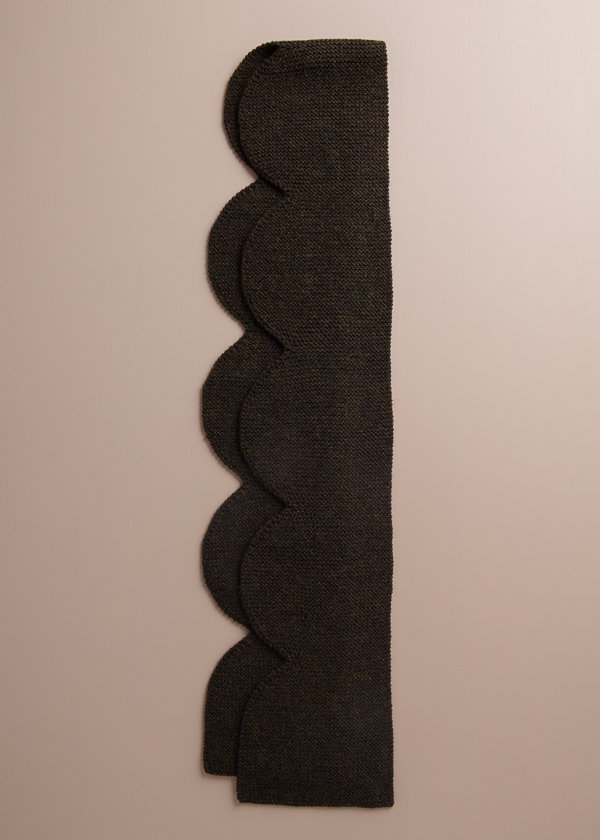
Cast on 39 stitches. We used a basic Long Tail Cast On.
DECREASING HALF-SCALLOP
WORK EVEN
Set-Up Row (wrong side): Slip 1 (see Notes), knit to end of row.
Row 1 (right side): Slip 1, knit to end of row.
NOTE: Mark previous row with removable stitch marker or piece of scrap yarn to indicate right side.
NOTE: Row 1 is the basic row for working in pattern, i.e. garter stitch with a slip-stitch selvage.
Repeat Row 1 forty-seven more times, ending with a wrong-side row. [25 garter ridges (see Notes) on right side]
DECREASE
Decrease Row 1 (right side): Slip 1, knit 2 together (k2tog), knit to end of row. [1 stitch decreased]
Continuing in garter stitch with slip-stitch selvage pattern, work Decrease Row 1 every fourth row 2 times, ending with 3 rows worked even. [36 stitches remain; 31 garter ridges on right side]
Continuing in pattern, work Decrease Row 1 every right-side row 4 times, ending with a Decrease Row 1. [32 stitches remain; 35 garter ridges on right side]
Decrease Row 2 (wrong side): Slip 1, knit to last 3 stitches, k2tog, k1. [1 stitch decreased]
Work [Decrease Row 1, Decrease Row 2] 3 more times. [25 stitches remain; 38 garter ridges on right side]
REPEATING SCALLOP
NOTE: Place a removable marker on the first stitch of this section each time it is worked. This marker indicates where to begin counting ridges for each repeat.
INCREASE
Set-Up Row (right side): Slip 1, knit to end of row.
Increase Row 1 (wrong side): Slip 1, knit to last 2 stitches, knit front and back (kfb), k1. [1 stitch increased]
Increase Row 2 (right side): Slip 1, kfb, knit to end of row. [1 stitch increased]
Work [Increase Row 1, Increase Row 2] 3 more times. [33 stitches; 4 garter ridges on right side, counting from removable stitch marker]
Continuing in pattern, work Increase Row 2 every right-side row 3 times, ending with Increase Row 2. [36 stitches; 8 garter ridges on right side, counting from removable stitch marker]
Continuing in pattern, work Increase Row 2 every fourth row 3 times, ending with Increase Row 2. [39 stitches; 15 garter ridges on right side, counting from removable stitch marker]
Work even in pattern for 23 rows, ending with a wrong-side row. [25 garter ridges on right side, counting from removable stitch marker]
DECREASE
Work Decrease section of Decreasing Half-Scallop. [38 garter ridges on right side, counting from removable stitch marker]
CONTINUE
Repeat Repeating Scallop section 7 more times.
INCREASING HALF-SCALLOP
Work Increase section of Repeating Scallop.
Work even in pattern for 26 rows, ending with wrong-side row. [38 garter ridges on right side, counting from removable stitch marker]
FINISHING
With right side facing you, bind off all stitches knitwise.
Weave in all ends and gently wet block.
ACCORDION SCARF PATTERN
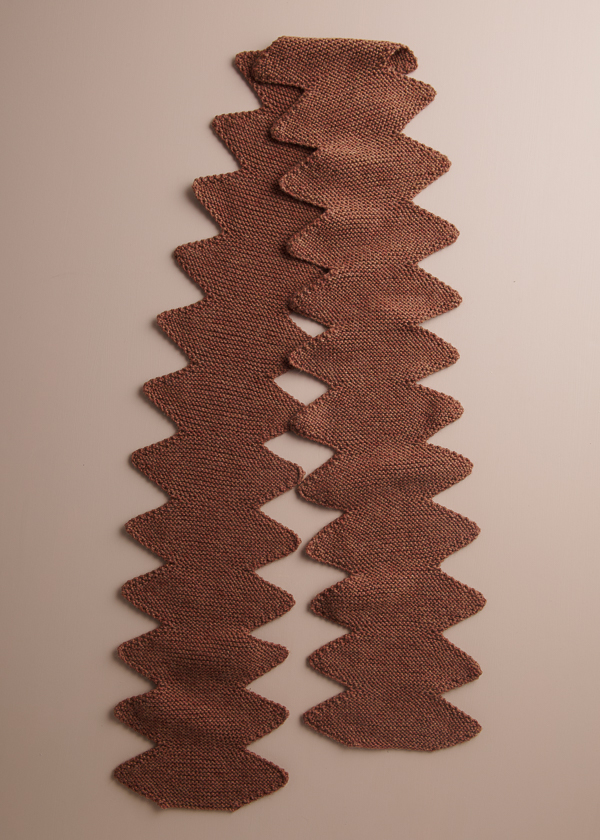
Cast on 18 stitches. We used a basic Long Tail Cast On.
FIRST ACCORDION
INCREASE
Set-Up Row (wrong side): Slip 1 (see Notes), knit front, back, and front (kfbf, see Notes), knit to last 2 stitches, kfbf, k1. [22 stitches]
Increase Row 1: Slip 1, knit front and back (kfb), knit to last 2 stitches, kfb, k1. [2 stitches increased]
NOTE: Mark previous row with removable stitch marker or piece of scrap yarn to indicate right side.
Repeat Increase Row 1 thirteen more times, ending with a wrong-side row. [50 stitches; 8 garter ridges (see Notes) on right side]
DECREASE
Starting with a right-side row…
Decrease Row: Slip 1, knit 2 together (k2tog), knit to last 3 stitches, k2tog, k1. [2 stitches decreased]
Repeat Decrease Row 15 more times, ending with a wrong-side row. [18 stitches remain; 16 garter ridges on right side]
REPEATING ACCORDION
NOTE: Place a removable marker on the first stitch of this section each time it is worked. This marker indicates where to begin counting ridges for each repeat.
INCREASE
Starting with a right-side row…
Increase Row 2: Slip 1, kfb, knit to last 2 stitches, kfb, k1. [2 stitches increased]
Repeat Increase Row 2 fifteen more times, ending with a wrong-side row. [50 stitches; 8 garter ridges, counting from removable stitch marker]
DECREASE
Work Decrease section of First Accordion. [18 stitches remain; 16 garter ridges on right side, counting from removable stitch marker]
CONTINUE
Repeat Repeating Accordion section 22 more times.
FINISHING
With right side facing you, bind off all stitches knitwise.
Weave in all ends and gently wet block.
COLUMN SCARF PATTERN
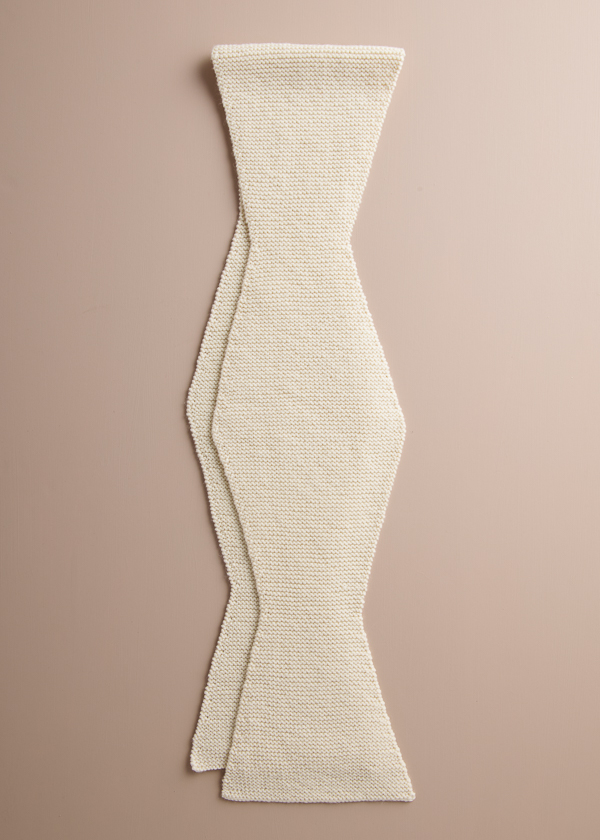
Cast on 48 stitches. We used a basic Long Tail Cast On.
Set-Up Row (wrong side): Slip 1 (see Notes), knit to end of row.
NOTE: This row is the basic row for working in pattern, i.e. garter stitch with a slip-stitch selvage.
DECREASING HALF COLUMN
Decrease Row (right side): Slip 1, slip slip knit (ssk), knit to last 3 stitches, knit 2 together (k2tog), k1. [2 stitches decreased]
NOTE: Mark previous row with removable stitch marker or piece of scrap yarn to indicate right side.
Continuing in garter stitch with slip-stitch selvage pattern, work Decrease Row every eighth row 11 times, ending with a Decrease Row. [24 stitches remain]
Work one wrong-side row even in pattern. [46 garter ridges on right side]
FULL COLUMN
NOTE: Place a removable marker on the first stitch of this section each time it is worked. This marker indicates where to begin counting ridges for each repeat.
INCREASE
Increase Row (right side): Slip 1, knit front and back (kfb), knit to last 2 stitches, kfb, k1. [2 stitches increased]
Continuing in pattern, work Increase Row every eighth row 11 times, ending with an Increase Row. [48 stitches]
Work one wrong-side row even in pattern. [45 garter ridges on right side, counting from removable stitch marker]
DECREASE
Work as for Decreasing Half Column. [24 stitches remain; 90 garter ridges on right side, counting from removable stitch marker]
CONTINUE
Repeat Full Column two more times.
Repeat Increase section of Full Column one more time.
FINISHING
With right side facing you, bind off all stitches knitwise.
Weave in all ends and gently wet block.
Share your progress and connect with the community by tagging your pics with #PurlSoho. We can’t wait to see what you make!
Learn About Knitting Yarn DK + All Our Beautiful Yarns
A true classic loved by knitters and crocheters alike, Knitting Yarn DK brings its crisp stitch definition, soft strength, and cushiony feel to this project! Made with 100% merino wool, this light worsted/DK-weight yarn comes in a ready-to-knit ball you’ll love to knit from. Simple stitches, dimensional textures, beautifully articulated cables, and glorious colorwork… Everything looks amazing in Knitting Yarn DK! Making something big, like a blanket or sweater? Shop our 1000-gram Knitting Yarn DK On A Cone collection, too!
More Knitting Patterns
- Be sure to explore our collection of (mostly free!) Knitting Yarn DK knitting patterns and cast on!
More Light Worsted/DK-Weight Yarns
- Shop our entire collection of light worsted/DK-weight yarns (What does DK-weight yarn mean, really? Our guide to DK yarn will answer your questions and demystify.)
- If you want to use a different yarn, be sure to take the time to get the correct gauge. Need help? Check our All About Gauge Tutorial, our Yarn Substitution article, and our Complete Guide To Yarn for lots of helpful information.
More Yarns With Similar Fiber
- Shop Knitting Yarn Fine, this yarn’s fingering- to sport-weight sibling
- Shop merino wool yarn
Looking for more inspiration? Explore all of our knitting patterns (including tons of free knitting patterns) and knitting tutorials, buy one of our many knitting kits and yarn bundles, and shop for beautiful yarn. We have over 55 gorgeous natural fiber yarns in 100’s of magnificent colors, designed to bring integrity, beauty, and joy to your next knitting project and only available at Purl Soho!

These are SO FUN. Part of the charm is how big, bold, and striking the shapes are. But if I wanted to scale down for a child (not just shorter in length), could you suggest simple math to do so? Or would that be an entirely new pattern. Thanks so much!!
Hi Libby,
Thank you so much for reaching out! We’re really glad to see you’re loving the Atelier Scarves as much as we are, and I’m happy to help you consider this modification.
In order to resize these scarves with the same weight yarn, you would need to not only change the cast-on, but also change the rate at which decreases or increases were made to create a similarly even geometric border. Things like the slope of the column scarf or the angle of the curve of the scalloped edge would need to be changed. This would be a bit beyond the scope of our resources at this time…but I do have another suggestion.
Since this pattern is worked with a DK weight yarn, you could work the pattern exactly as it’s written in a fingering-weight yarn to result in a proportionally smaller scarf. I would recommend taking a look at Knitting Yarn Fine, which would preserve the same fiber properties, Estuary or Quartz. I would suggest knitting and blocking a gauge swatch to see what gauge you’re getting, and then deciding from there how many repeats you would like to work and how many yards you might need.
I hope this helps point you in the right direction. Please feel free to reach back out with any other questions you might have!
Happy knitting,
Hills
Brilliant idea, thank you!
Hi, if I wanted to knit the scallop scarf using a contrast color for just the scallop edge, would I just need 1 skein for the contrast color and the three skeins for MC?
Hi Mary,
Thank you so much for reaching out! I’m happy to help you consider this modification.
Since the scalloped edge is a part of the body of the scarf, and not a separate edging effect, it would be really tricky to estimate how much yarn you would need to intarsia a contrast color with the body color, sadly.
I would suggest knitting and blocking a gauge swatch in that style and making your yardage estimates from there. Please feel free to reach back out with other questions as you work.
All the best,
Hills
Why are all you project so dark. Very hard to see exactly what they are therefore I scroll by. Please use light color yarn I know I have missed out on some lovely projects.
Hi Phyllis,
I’m so sorry to read that these sample photos weren’t helpful for you, and that you may have missed some fun projects because of it. This is definitely not the experience we envision for you, or any of our community members. I really appreciate you reaching out and letting us know. I’ll be sure to pass along this feedback to our photography team.
In the meantime, if you would like any additional photos of any project, please feel free to email us at [email protected], and we would be happy to take a peek for some photos with brighter lighting for you! Some folks do find it helpful to turn up the brightness on their monitor, as well, though I know this isn’t a universal fix.
Kindly,
Hills
I love Purl SoHo’s patterns and yarns!
Can you suggest other yarns at Purl SoHo that would work well to knit any,
or all, of the 3 scarf patterns most recently posted.
Thank you!
Hi Karen,
Thanks so much for reaching out with your kindness! We’re thrilled to see that you love our patterns and yarns, and I’m really glad to help you consider some yarn substitutions.
We chose Knitting Yarn DK because it offers a bit more structure to the fabric. I’d suggest taking a look at Good Wool, Vinter Wool, or Echo Wool for some great alternatives with structure to them.
While it’s less essential to match gauge for an unfitted project like a scarf, it’s still super helpful to work (and block!) a gauge swatch when substituting yarns. It’s the best opportunity to adjust your needle size and ensure you love the finished fabric you’re creating. It’s also a great chance to see how your project’s finished size will compare to ours.
I hope you help find the perfect yarn, and feel free to reach back out anytime.
All the best,
Hills
Hi! I really like the accordian scarf. I have a 17 year-old granddaughter, not sure if she would wear that, but am thinking about it anyway for her. She loves pink, and I see a couple of shades that would be nice. Is it possible to make a long enough scarf with 2 skeins instead of 3? I would think 400 plus yards would be enough. Your thoughts???
Hi Marilyn,
Thank you so much for reaching out! We’re so glad to see you love the Accordion Scarf, and I’m happy to help you consider this modification.
The final sample ends up being nearly 70″ long. I do think it’s totally possible to work fewer repeats of the Repeating Accordion section, but I’m a little uncertain about the yardage requirement. If you meet the pattern’s gauge, you could work a scarf around 42″ with 400 yards. We typically recommend working around 60″ for a scarf to comfortably wrap around once.
If you want to give this a try, you’ll work the first sections for “Increase” and “Decrease: as they’re written (which uses 16 garter ridges at 22 ridges per 4 inches). This section will take approximately 3 inches to complete, leaving you with 39 inches to work with for the Repeating Accordion. Each section in the Repeating Accordion pattern is worked over 16 garter ridges, as well. This section was originally repeated 22 times. It looks like you ought to be able to repeat this section 13 times with 400 yards, at the same gauge as our pattern.
If you were to knit this pattern at a fingering weight, the project would end up being slightly shorter, without requiring a change to the pattern. I’d recommend checking out Knitting Yarn Fine for some fingering-weight yarn inspiration.
I hope this helps point you in the right direction, and I hope your granddaughter loves the scarf you make for her! Please feel free to reach back out with any other questions you might have as you consider your project, or as you work.
All the best,
Hills
I have put done my knitting project to start on these beautiful and unique scarves!
Your website is the first thing I look at every morning !
You share with us all your beautiful patterns, yarns and a step by step tutorial of all the techniques, that is truly incredible!
I have yarn that I can use for this project, but your Knitting Yarn DK colors are so beautiful that I do need to order some 🙂
Thank you again 🌻
Hi Hilda,
We’re thrilled to read how excited you are to start the Atelier Scarves, and honored to be included in your morning routine!
If you ever have any questions while you work, please don’t hesitate to reach out to us here or at [email protected]. We can’t wait to see what you make next!
Happy knitting,
Hills
I’m about to start one of the scarves. Is there a technical reason that you suggest circular needles rather than straight ones?
Thanks,
/Fran
Hello Fran,
Thank you so much for reaching out. I’m so glad to help you get started with your Atelier Scarf project.
I see what you mean, and I do think you could work this pattern on straight needles. So long as no part of the pattern exceeds around 100 stitches (where most straight needles start to max out), and you don’t need to knit in the round, then you should be able to substitute straight needles just fine.
I hope you love the project! Please feel free to reach back out anytime.
All the best,
Hills
Why do you recommend working this project on a circular needle?Would it work as well on a pair of straight needles?
Hi Fran,
Thanks for your reply! Rest assured, this project will work just as well on straight needles. Our Design Team often chooses circular needles to work flat as a stylistic choice (and sometimes out of preference).
I hope this helps!
Happy knitting,
Hill